15 Retro Logo Templates Badges: A Practical Set for Vintage Branding
Understanding the Collection: 15 Authentic Retro Logo Templates
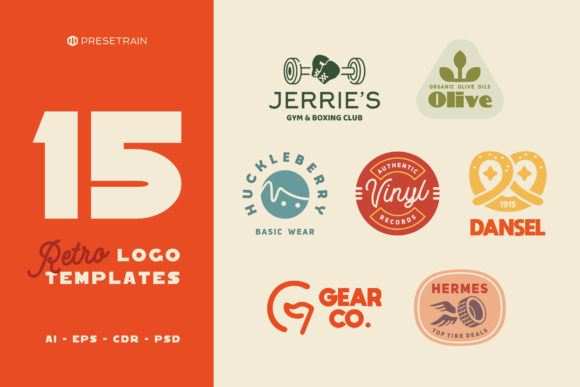
When establishing a visual identity, particularly for a small business, local brand, or specific project, the challenge often lies in achieving a professional, distinctive look without the extensive time and budget of a fully custom design process. This is where thoughtfully curated asset collections can provide significant value. The set known as 15 Retro Logo Templates Badges presents itself as a focused solution for those drawn to vintage, classic, or nostalgic aesthetics. It is not a single logo, but a pack of fifteen distinct badge and emblem-style templates, each crafted with a retro theme in mind.
The core proposition is straightforward: provide designers, entrepreneurs, and creators with a library of editable, scalable vector templates that capture the warmth, craftsmanship, and timeless appeal of retro design. These templates are built for practical application, aiming to accelerate the identity design phase for projects where a vintage vibe is the desired direction. The value lies in their pre-designed nature—they offer a starting point that is already conceptually sound, saving the user from the blank canvas problem while still allowing for deep customization to fit a specific brand's name and message.
Analyzing Key Features and Practical Usability
The utility of any template set hinges on its technical execution and flexibility. This collection emphasizes several key features designed to integrate smoothly into professional workflows.
- True Scalability with Vectors: The templates are built on 100% scalable vector paths. This is a non-negotiable feature for logo design, ensuring that a mark created for a business card will remain crisp and clear when scaled up for a storefront sign, banner, or merchandise. The vector foundation in formats like AI and EPS provides the control needed for professional output.
- Comprehensive Software Compatibility: The set includes native files for Adobe Illustrator (AI), Adobe Photoshop (PSD), and CorelDraw (CDR), along with universal EPS files. This wide compatibility is a practical strength, ensuring that users aren't locked into a single software ecosystem. Whether you work primarily in Illustrator's vector environment or Photoshop's raster-based space for certain effects, you have access to an editable source file.
- Customization Depth: The templates are described as fully customizable. In practice, this means users can typically alter colors, modify shapes, and edit text directly within the provided files. The inclusion of font links in the accompanying Readme file is a helpful touch, addressing a common pain point where the exact typeface used in a preview is missing. This allows for a cohesive look when the final brand name is inserted.
- Organized File Structure: The mention of "well-organized and layered files" is significant. For anyone who has opened a complex template only to find a single, locked background layer, this is a welcome promise. Logical layer naming and grouping (e.g., separate layers for the main emblem, text, and decorative elements) drastically reduce the time needed to locate and edit specific components.
These features collectively point towards a resource built with the end-user's efficiency in mind. The goal is to minimize technical hurdles and maximize creative focus.
Assessing Real-World Application and Strengths
In evaluating how this set might perform in a real project, its strengths become clear in specific contexts. The retro badge style is inherently versatile for certain industries and applications. It conveys a sense of heritage, trust, and artisanal quality—attributes highly sought after by craft breweries, barber shops, coffee roasters, outdoor apparel brands, classic diners, or any service business aiming to project authenticity and timelessness.
The 15 Retro Logo Templates Badges set shines as a starting point for exploration. An entrepreneur could use these templates to quickly generate a dozen visual concepts for a brand name, testing how different typographic treatments and emblem shapes feel before committing to a direction. This rapid prototyping can be invaluable in the early brainstorming phase, facilitating better communication with stakeholders or a designer. For freelancers and agencies, such a library can serve as a valuable internal resource to present initial concepts to clients, streamlining the approval process.
The consistency across the set is another potential advantage. While each template is unique, they likely share a common design philosophy—balanced compositions, appropriate vintage detailing (like distress textures, classic ribbons, or circular emblems), and a cohesive color palette suggestion. This ensures that if a brand eventually uses multiple logos from the set (e.g., a primary logo and a secondary mark), they will feel related and part of the same visual system.
Identifying the Ideal User and Situational Fit
This collection is not designed to be a universal solution for all branding needs. Its audience is quite specific, and understanding that fit is key to determining its value.
Who benefits most?
- Small Business Owners and Local Brands: Particularly those in retail, hospitality, or skilled trades where a vintage aesthetic aligns with the brand story. It offers a cost-effective way to achieve a professional look.
- Freelance Designers and Marketers: As a time-saving tool for client projects or to populate a portfolio with diverse style examples. It can also be a source of inspiration for custom work.
- Creators and Hobbyists: For personal projects, YouTube channels, podcast artwork, or event branding (like a local fair or community market) where a full design service isn't feasible.
- Bloggers and Publishers: To create a distinctive masthead or section branding that requires a classic, trustworthy feel.
Ideal situations include: When the project brief explicitly calls for a "vintage," "classic," or "retro" feel. When budget and timeline are constrained, but a generic clip-art logo is unacceptable. When the need is for a secondary mark, label design, or merchandise graphic rather than a complex, primary identity system.
Practical Considerations and Limitations
No resource is without its constraints, and a balanced view acknowledges them. The primary limitation of any template set is inherent in its nature: it is not a custom design. There is a risk, however small, that another business could use the same template. Mitigating this requires thoughtful customization—changing colors significantly, altering letterforms if possible, and integrating the logo with other unique brand elements to create a distinctive system.
The note that "fonts are not included" is a critical detail. Users must be prepared to source and potentially license the recommended typefaces. While the links point to free fonts, verifying the exact license for commercial use is the user's responsibility. Similarly, the prohibition on reselling the logos "as is" reinforces that these are tools for creating a final product, not resale items themselves.
The effectiveness of the final product will also depend on the user's software proficiency. While the files are customizable, achieving a polished result requires a working knowledge of the vector or raster software being used. A user unfamiliar with Illustrator's pen tool or Photoshop's layer management might find the editing process less intuitive than expected.
Conclusion: A Focused Tool for Vintage Branding Projects
The 15 Retro Logo Templates Badges set represents a practical and well-considered asset for a specific niche. It delivers on the promise of providing authentic, customizable retro logo designs in professional, versatile file formats. Its real-world value is highest for those who need a strong, vintage-inspired visual identity quickly and affordably, and who possess the basic skills to customize the templates effectively.
It is best viewed not as a final logo, but as a sophisticated and time-saving foundation—a collection of quality building blocks that, when personalized with care and integrated into a broader brand context, can result in a professional and evocative visual identity. For the right user and the right project, it can be an exceptionally useful part of the creative toolkit, bridging the gap between generic placeholders and the high cost of fully bespoke design.