The Art of Tangible Creation: Mastering Junk Journal Folio Templates for Vintage Projects
In an era dominated by ephemeral digital content, the tactile resurgence of paper crafting offers a grounding, sensory experience. At the heart of this creative revival lies the junk journal—a chaotic, beautiful collection of memories, textures, and art. For creators seeking to add structure to this organized chaos, Junk Journal Folio Templates serve as the architectural blueprint. These templates provide the framework necessary to transform loose sheets of decorative paper into functional, intricate folios that anchor the entire journaling experience.
The specific utility of printable blank templates cannot be overstated. Unlike pre-made journals that dictate a specific aesthetic, printable templates allow the crafter to maintain total control over the substrate. By utilizing these digital assets, you are not merely buying a product; you are acquiring a reusable tool that adapts to your specific vintage vision. The process begins with a fundamental understanding of how these digital files translate into physical, three-dimensional objects.
The Anatomy of a Folio Template
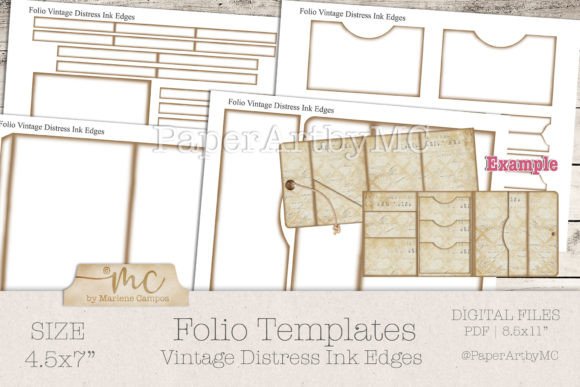
At its core, a folio is a folded container or pocket designed to hold ephemera, photos, or smaller journal pages. The genius of using a vintage junk journal template is that it removes the mathematical guesswork from the construction process. These files are engineered with precision, ensuring that fold lines, gluing tabs, and pocket depths align perfectly when printed and assembled.
When you download a high-quality PDF file designed for 8.5x11 paper, you are receiving a mapped-out blueprint. The "What You Get" aspect of these digital products usually encompasses a variety of sizes and styles—some featuring tuck spots, others offering multi-layered folding mechanisms. The critical feature is that these are blank templates. They are designed to be printed onto your chosen decorative paper, allowing the vintage patterns, distressed textures, and muted color palettes of the paper itself to define the final look of the folio.
Selecting the Perfect Substrate
The success of a junk journal folio relies heavily on the interaction between the digital template and the physical paper. The instructions often suggest printing on white paper ranging from 160-180g. This weight is substantial enough to provide structural integrity for the folio, ensuring it can hold weight without tearing, yet flexible enough to fold cleanly without cracking.
However, the true magic of the vintage aesthetic often lies in experimentation. Many seasoned crafters prefer using opaline paper, which offers a translucent, vellum-like quality that adds a layer of ethereal depth to the project. While standard cardstock is robust, opaline paper allows for layering effects where the underlying journal page can be seen through the folio cover, creating a complex visual narrative. When selecting your substrate, consider the tactile experience; the paper should feel aged and organic, contributing to the vintage narrative of the journal.
Technical Precision: Printing Strategies for High-Resolution Results
The transition from a digital file to a physical template is the most critical phase of the workflow. The files provided are typically High Resolution for print, meaning the vector lines and registration marks are crisp. This eliminates the need to alter any part of the design, but it does require attention to your printer settings.
Calibrating Your Home Printer
Whether you use an HP printer or another brand, the settings menu is your best friend. It is not enough to simply hit "Print." You must manually adjust the settings to match the paper type and size. If you are using heavier cardstock, selecting "Cardstock" or "Heavy Paper" in the printer driver will often slow down the feed mechanism, ensuring the ink adheres properly and the paper does not jam.
For those seeking the highest fidelity, adjusting the resolution to "Best" or "High Quality" is recommended. While this uses more ink, it ensures that the subtle fold marks and cutting guides on the Junk Journal Folio Templates are perfectly legible. Double-sided printing adds another layer of complexity. Depending on the printer's alignment, the front and back designs may not match up perfectly. It is imperative to make proofs before committing to your expensive vintage paper. Print a test page on standard copy paper to check for alignment and ink saturation.
The Workflow of Construction
Once the templates are printed onto your chosen vintage papers, the construction phase begins. This is where the blank templates transform into functional art.
- Cutting: Begin by rough-cutting the templates. Leave a small margin around the edges initially to handle the paper without damaging the printed lines.
- Scoring: Use a bone folder and a ruler to score the fold lines. This compresses the paper fibers, allowing for a crisp, professional fold that is essential for folios.
- Folding: Fold along the scored lines. For vintage projects, you may choose to slightly "rough up" the edges with sandpaper or ink distressing tools to remove the "new" look of the cut paper.
- Adhering: Apply glue to the designated tabs. Because the templates are designed for 8.5x11 paper, the scale is manageable for hand-assembly without requiring industrial equipment.
The resulting folios can be nested inside one another or attached to the spine of a larger journal. They create dynamic depth, allowing the journal to expand and hold bulky ephemera like tickets, dried flowers, or fabric swatches.
Considerations for the Modern Crafter
While home printing offers convenience and immediacy, it is not the only path. The prompt often notes that every computer and printer may have variation. Color calibration differences between monitors and printers can result in a vintage sepia tone appearing more orange or green than intended.
For creators who lack a home printer or who require a volume of pages that would be cost-prohibitive to print with home ink cartridges, local print shops are a viable alternative. These facilities often have professional printers capable of handling larger paper sizes and heavier weights than a standard home office machine. Furthermore, they can assist with double-sided alignment issues, saving the crafter time and frustration.
Real-World Applications and Use Cases
The versatility of Junk Journal Folio Templates extends beyond personal memory keeping. Educators can use these templates to create interactive history projects, where students place historical documents inside folios made from period-appropriate paper designs. Business owners in the boutique stationery sector can utilize these templates to prototype new product lines, testing different paper stocks and vintage aesthetics before committing to mass production.
For the hobbyist, these templates are the key to unlocking creativity. They provide the structure that some find intimidating to create from scratch, allowing the user to focus on the "junk" aspect—collaging, layering, and storytelling. The vintage nature of these projects encourages a slow, mindful approach to crafting, turning the assembly process into a meditative practice.
Troubleshooting and Optimization
Even with High Resolution files and perfect paper, issues can arise. Ink smearing is a common issue with heavy coverage on coated papers. If this occurs, allowing the pages to dry for 24 hours before handling is crucial. If your printer struggles to feed thick paper, using a rear-feed tray (if available) often yields better results than a bottom cassette.
Additionally, consider the environment. High humidity can cause paper to warp immediately after printing. Storing your printed templates under a heavy book for a few hours before cutting can help flatten them and ensure accurate folding.
By leveraging the precision of printable blank templates and the tactile beauty of vintage papers, creators can produce folios that are not only functional but deeply personal. The ability to print, cut, and fold your own structural elements ensures that every junk journal is a unique reflection of the artist's vision, grounded in the reliability of professional-grade design files.