Accelerating Amazon KDP Publishing with 100 Editable Canva Templates
The self-publishing landscape on Amazon Kindle Direct Publishing (KDP) has evolved into a highly competitive arena. While the opportunity for passive income and global reach remains immense, the barrier to entry has shifted from access to efficiency and quality. Authors and publishers today face the dual challenge of producing high-quality interior designs while maintaining a rapid release schedule. This is where the strategic integration of digital tools becomes a necessity rather than a luxury. By leveraging resources like 100 Editable Canva Templates for KDP, creators can bridge the gap between concept and publication, transforming the tedious design process into a streamlined workflow.
The Operational Bottleneck in Self-Publishing
For many independent publishers, the design phase represents the most significant bottleneck. Creating a planner, journal, or calendar from scratch requires not only graphic design skills but also a deep understanding of print specifications, such as bleed, trim size, and margin safety. A single miscalculation can result in a rejected file or a subpar physical product. Consequently, many talented writers and entrepreneurs stall out before they ever upload their first manuscript.
The availability of comprehensive template bundles addresses this operational drag directly. Instead of spending hours aligning grids for a 2024 calendar or formatting checkboxes for a to-do list, publishers can utilize pre-structured layouts. This approach allows the creator to focus on the content and the niche market strategy, rather than the technicalities of pixel-perfect alignment. The use of 100 Editable Canva Templates for KDP effectively removes the technical barrier, allowing anyone to produce professional-grade interiors regardless of their design background.
Anatomy of a Comprehensive Template Bundle
When evaluating resources for KDP publishing, the breadth of content is crucial. A robust collection typically covers a wide spectrum of low-content and medium-content book genres. The utility of a bundle lies in its versatility—does it serve the fitness enthusiast as well as the financial planner?
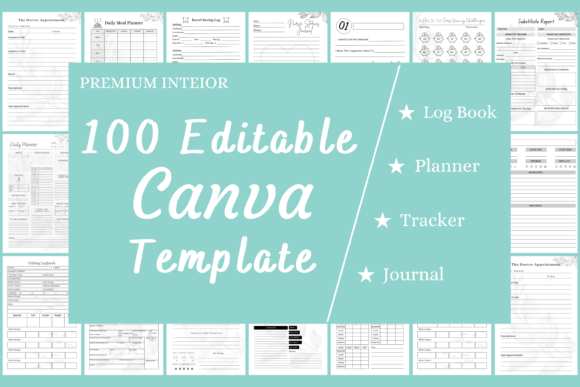
A standard, high-value offering in this space, such as the 100 Editable Canva Templates for KDP, generally includes a diverse array of interior pages designed to meet various user needs. The structure of such a bundle often breaks down into specific categories:
- Temporal Planning: This includes yearly overviews such as the 2023 calendar, 2024 calendar, and 2025 calendar. These are essential for planners that need to remain relevant or be pre-sold for the upcoming year.
- Daily and Weekly Logistics: Functional tools like the Daily Planner, Weekly Planner, and Daily To-Do List form the backbone of the productivity niche. These pages are designed for high utility, helping users organize their chaotic schedules.
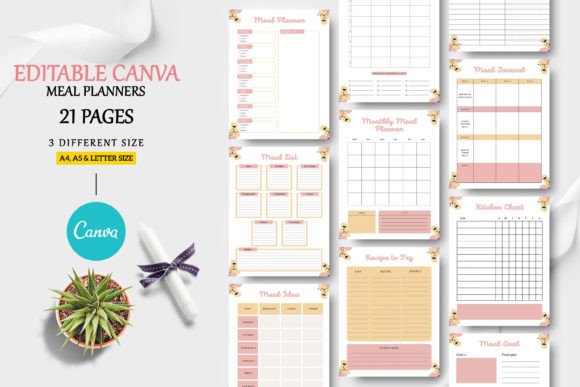
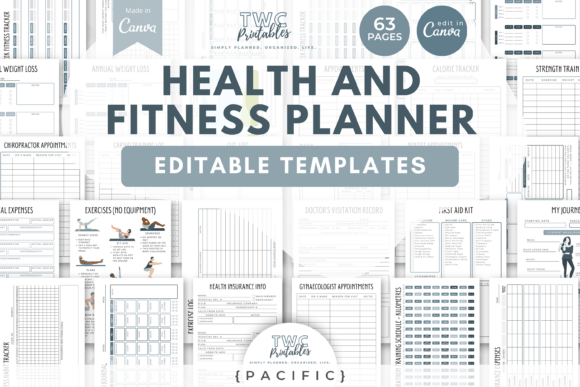
- Health and Wellness: The market for self-improvement journals is massive. Templates in this category often include a Self Care Planner, Weekly Food Tracker, Daily Weight Loss Planner, and Daily Meal Planner. These provide structured frameworks for users to track their physical and mental health journeys.
- Mindfulness and Gratitude: Mental well-being is a trending topic. Resources often feature a Gratitude Journal or a Daily Gratitude Journal. These layouts are typically more open-ended, allowing for free-form writing while providing prompts to encourage reflection.
- Financial Management: Money management tools are consistently in demand. This includes specific challenges like the 100 in 30 Day Saving Challenges, 200 in 30 Day Saving Challenges, and scaling up to the 500 dollar mark. These gamified approaches to finance are popular among consumers looking to build better habits.
- Project Management: For the professional or creative, a Project To-do List helps in breaking down large goals into manageable tasks, ensuring that the journal serves a functional purpose beyond mere note-taking.
The Technical Reality: Canva Pro and Premium Elements
While the promise of "editable" templates is appealing, it is vital to understand the technical ecosystem in which they operate. Canva is a powerful browser-based design tool, but it operates on a freemium model. Many high-quality templates utilize "Pro" elements—premium stock photos, proprietary fonts, or advanced graphics—to achieve a polished look.
When downloading a bundle of 100 Editable Canva Templates for KDP, users must be aware of the licensing and access requirements. PLEASE NOTE that some templates have premium elements included. To access and download the whole item without watermarks or access restrictions, you will need a Canva Pro account. This is a standard industry practice. The cost of a Canva subscription is often viewed as a business expense that pays for itself through the time saved in design and the professional quality of the final product. Without a Pro account, users may find themselves needing to swap out premium elements for free alternatives, which can slightly alter the aesthetic but remains a viable workaround.
Workflow: From Download to Published Asset
The true power of these templates lies in the workflow they enable. The process of turning a raw template into a sellable KDP book is designed to be intuitive, even for those without design experience.
The journey typically follows a linear path:
- Selection and Combination: The publisher does not need to use the 100 templates as a single monolithic book. The value lies in the ability to choose, combine, and rearrange them. For instance, one could combine the Weekly Goals Tracker with the Daily Meal Planner to create a specialized "Health & Productivity" journal.
- Customization: Once the pages are selected, the editing phase begins. Because these are Canva files, the user interface is drag-and-drop. You may modify this template by replacing the text with your own, dragging and dropping your own photos as appropriate, and adjusting the colors. This allows for brand consistency, ensuring that the cover matches the interior.
- Export and Upload: After the design is finalized, the file is exported as a Print PDF (standard for KDP interiors) and uploaded to the Amazon platform.
This workflow drastically reduces the time-to-market. What used to take days of formatting in complex software like Adobe InDesign can now be accomplished in a matter of hours.
Strategic Application: Building a Niche Library
For the entrepreneur looking to expand your Amazon KDP business, volume and variety are key. The algorithm favors publishers who consistently release quality content. However, releasing 50 books a year is impossible if each one requires weeks of custom design work.
Using a bundle of 100 Editable Canva Templates for KDP allows for the rapid creation of a content library. A publisher can identify a trending niche—such as "Budgeting for College Students"—and quickly assemble a book using the 300 in 30 Day Saving Challenges and Weekly Planner templates. They can then pivot to the fitness niche using the Daily Weight Loss Planner and Weekly Food Tracker.
This ability to pivot quickly allows publishers to test markets with minimal risk. If a specific type of planner does not sell, the time investment was low. If it succeeds, the publisher can create variations (e.g., monthly editions) using the same base templates.
Design Principles for Low-Content Books
While templates provide the structure, the publisher must still adhere to good design principles to ensure the book is usable. A common mistake in the KDP space is over-designing. While the templates may look beautiful with decorative elements, the end-user needs a functional tool.
When customizing the Daily Planner or Project To-do List, ensure there is ample white space for writing. The lines or checkboxes should be clearly defined. When working with the Gratitude Journal or Daily Gratitude Journal, the font choices should be legible and sized appropriately (typically 11pt to 14pt for body text).
Furthermore, the cover design is the "billboard" for the book. While the interior templates handle the functionality, the cover must communicate the value proposition instantly. Using the same color palette found in the 100 Editable Canva Templates for KDP ensures a cohesive product that feels professional and intentional.
Future-Proofing Your Inventory
The inclusion of dates like the 2023 calendar, 2024 calendar, and 2025 calendar in these bundles is a strategic advantage. KDP publishers must plan ahead. A planner for the upcoming year should ideally be uploaded and optimized for SEO at least three months prior to January 1st. Having templates ready for 2025 now allows the publisher to prepare their listings, gather reviews, and build momentum before the rush of New Year's resolution shoppers.
Additionally, the inclusion of evergreen content like the Daily To-Do List or Self Care Planner ensures that the books remain relevant year-round. These are not tied to specific dates and can generate sales consistently throughout the year.
Conclusion: The Democratization of Design
The barrier to entry for publishing has never been lower, but the barrier to success requires smart work. By utilizing resources like 100 Editable Canva Templates for KDP, creators can bypass the steep learning curve of graphic design. The ability to create your own templates, upload them, and profit more is no longer reserved for those with technical degrees; it is accessible to anyone with a vision and a willingness to customize. Whether you are a hobbyist creating a journal for a specific community or a business owner scaling a publishing empire, these templates provide the foundation upon which profitable products are built.