Streamlining Design Projects with Tropical Frames and Templates Clip Art
In the fast-paced world of digital design and content creation, efficiency is paramount. Professionals and hobbyists alike often find themselves needing to produce high-quality visuals quickly, whether for a client presentation, a social media campaign, or a personal craft project. This is where high-quality, pre-made assets become invaluable. A set like the Tropical Frames, Templates Clip Art collection is not merely a decorative element; it is a functional tool designed to integrate directly into a creative workflow, saving hours of drawing, scanning, and digital rendering time.
Understanding the Asset: More Than Just Decoration
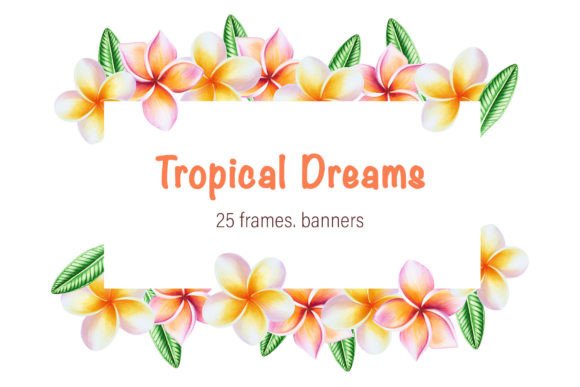
At its core, this collection provides 25 isolated frames and templates featuring realistic, hand-painted tropical leaves and flowers. The assets include monstera, caladium, alocasia, palm leaves, and plumeria flowers, all rendered in a marker and watercolor style. Crucially, they are delivered as high-resolution files—ranging from 5000 to 8000 pixels at 300 DPI—on a transparent background. This technical specification is the first key to practical implementation. The high resolution ensures print readiness for large formats like posters or textile patterns, while the transparent PNG format allows for seamless layering in any standard graphic design software, from Adobe Photoshop and Illustrator to Canva and Procreate.
Integration into the Creative Workflow
The true value of this clip art set is revealed when examining how it fits into various stages of a project. It is not a standalone solution but a versatile component that can be deployed at different points in the process.
Phase 1: Ideation and Prototyping
Before a single final design is rendered, the prototyping phase benefits immensely from readily available visual assets. A graphic designer working on a brand identity for a tropical-themed café can use these frames to quickly mock up menu layouts, social media post templates, or loyalty card designs. By dropping in placeholder text and images within the frames, the designer can present multiple concepts to a client in a fraction of the time it would take to create each frame from scratch. This allows for rapid iteration and client feedback early in the process, aligning expectations before committing to final production.
Phase 2: Production and Execution
During the main production phase, these templates become the building blocks of the final product. For a textile designer, the isolated leaf and flower elements can be arranged, scaled, and combined to create unique repeat patterns for fabrics, wallpapers, or wrapping paper. The consistent watercolor style across all elements ensures visual harmony, eliminating the mismatched look that can occur when sourcing assets from different providers. Similarly, a small business owner creating their own product labels or logos can use a single plumeria flower or a frame of monstera leaves as a central design element, ensuring a professional and cohesive aesthetic without needing advanced illustration skills.
Phase 3: Post-Production and Multipurpose Application
After a primary project is complete, these assets often find new life. The same frame used for a wedding invitation design can be repurposed for thank-you cards, table numbers, or a digital event banner. This concept of asset reuse is a cornerstone of an efficient creative business model. The collection's note that it is part of a larger Tropical collection further supports this, allowing for the expansion of a visual theme across multiple projects and product lines with guaranteed stylistic consistency.
Practical Implementation and Workflow Tips
Integrating new assets smoothly requires a bit of forethought. Here are actionable steps for making the most of a clip art set like this one.
- Organize Upon Download: Immediately upon unzipping the archive, create a dedicated folder structure. For example: Client Projects > Tropical Branding > Assets > Frames. Clear naming is also helpful—renaming files from generic numbers to descriptive titles like "Monstera_Circle_Frame_01.png" can save significant search time later.
- Establish a Color Palette: While the watercolor style is consistent, the natural greens and vibrant flower colors may vary slightly. Use the eyedropper tool in your design software to sample colors directly from the clip art and create a project-specific color palette. This ensures that any additional text, shapes, or backgrounds you add will harmonize perfectly with the pre-drawn elements.
- Leverage Layer Management: When using the frames in a composition, place the frame on its own layer above your background and content layers. This allows for easy repositioning, scaling, and the application of blending modes or opacity adjustments without disrupting the rest of your design. For instance, setting a frame layer to "Multiply" can create an interesting integrated effect with a textured background.
- Combine with Other Tools: These frames work exceptionally well in conjunction with other design resources. Pair them with clean, sans-serif typography for modern contrast, or use them to enhance photographs. A portrait photo placed within a tropical leaf frame instantly gains a thematic context. They also complement other digital assets like watercolor splashes, gold foil textures, or subtle linen paper backgrounds.
Key Considerations for Seamless Use
To avoid frustration and ensure quality, a few factors should be considered during the planning stage.
- Compatibility and Software: While PNG files are universally compatible, ensure your chosen software can handle the large file sizes (5000-8000 pixels). Programs like Photoshop and Illustrator will manage them with ease. For web-based tools like Canva, you may need to be mindful of upload limits or performance when using multiple high-resolution assets in a single design.
- Color Accuracy: The note that screen colors may differ from printed colors is a critical reminder for any print project. Always perform a test print, especially if the final output is for physical products like dishes or textiles. Convert your final design file to the appropriate color profile (CMYK for most print) and consult with your print provider for best results.
- Scalability and Quality Control: The high 300 DPI resolution provides a safety margin for scaling. However, it is still good practice to avoid excessive enlargement beyond the original pixel dimensions to maintain crispness. When scaling down for web use (e.g., social media graphics), remember to resize and sharpen the final export to optimize file size and clarity for screens.
- Long-Term and Brand Consistency: For entrepreneurs and small business owners, this asset set can become a foundational part of a brand's visual toolkit. By using the same style of frames and elements across your website, social media, packaging, and printed materials, you reinforce brand recognition. The existence of a broader collection makes it possible to maintain this consistency as your needs grow, adding new elements without a stylistic overhaul.
Ultimately, a well-curated set of Tropical Frames and Templates Clip Art functions as a force multiplier in the creative process. It addresses the common bottleneck of asset creation, allowing creators to focus their energy on higher-level tasks like concept development, client communication, and strategic marketing. By understanding its technical specifications and planning its integration into specific workflows—from initial mockups to final production and beyond—users can leverage these assets to produce polished, professional, and thematically cohesive work more efficiently than ever before.