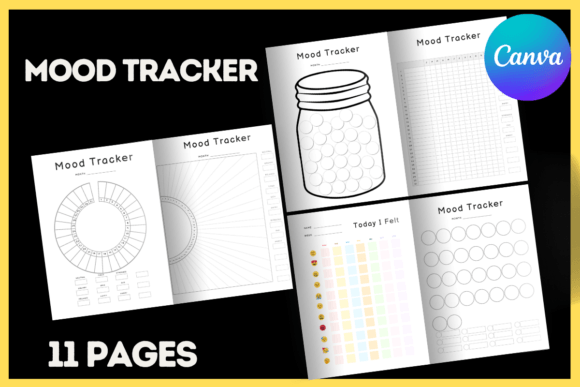
Why Editable Mood Tracker Canva Templates Are Revolutionizing Personal and Professional Well-being
In an era defined by rapid digital transformation and the blurring lines between professional and personal life, the pursuit of emotional intelligence and mental clarity has become a strategic priority. For professionals, creators, and entrepreneurs, the ability to manage stress and maintain a balanced emotional state is not merely a lifestyle choice—it is a critical component of sustainable productivity. This shift has given rise to a burgeoning market for tools that facilitate self-awareness, with Editable Mood Tracker Canva Templates emerging as a pivotal resource in the digital wellness landscape. These templates represent a convergence of design accessibility, psychological insight, and the modern demand for customizable productivity tools.
The Intersection of Design and Emotional Intelligence
Historically, mood tracking was relegated to the realm of clinical therapy or rudimentary journaling. Today, however, the concept has been democratized through digital design platforms. Editable Mood Tracker Canva Templates are pre-designed layouts created in Canva, a leading online design platform, that allow users to log, visualize, and analyze their emotional patterns over time. These templates typically span an 11-page structure, formatted at the standard 8.5 x 11 inches, making them versatile for both digital use and high-quality printing.
The significance of these templates lies in their flexibility. Unlike static applications, an editable template empowers the user to take ownership of the aesthetic and functional aspects of their tracker. This is particularly relevant for creators and marketers who view their organizational tools as an extension of their personal brand. By utilizing these templates, one transforms a mundane administrative task into a creative exercise, thereby increasing the likelihood of consistent engagement.
Aligning with Modern Consumer Trends
The popularity of Editable Mood Tracker Canva Templates is not an isolated phenomenon but rather a reflection of broader consumer trends. We are witnessing a significant move towards "analog nostalgia" within a digital framework. Professionals are increasingly seeking methods to disconnect from screens while still leveraging digital efficiency. Printable templates offer a solution: they are designed digitally for convenience but intended for physical use, allowing for a tactile experience that fosters deeper reflection.
Furthermore, the "creator economy" has shifted user expectations. Today’s enthusiasts and freelancers do not want to be passive consumers of content; they want to be active participants in its creation. The requirement for an Editable Canva Link addresses this directly. It acknowledges that the modern user possesses a unique workflow and aesthetic preference. Whether it is adjusting color palettes to match a corporate brand or modifying the layout to track specific emotional triggers, the editable nature of the product meets the user where they are.
Practical Applications for Professionals and Entrepreneurs
For the business-minded individual, the utility of a mood tracker extends beyond personal well-being; it becomes a tool for performance optimization. Emotional states directly influence decision-making, creativity, and leadership capabilities. By utilizing Editable Mood Tracker Canva Templates, entrepreneurs can identify correlations between their moods and their business outcomes.
Consider a freelancer managing multiple clients. High-stress periods might correlate with specific project types or deadlines. By tracking these patterns over an 11-month or 11-week cycle (depending on the template structure), the freelancer can make data-driven decisions about workload management. Similarly, marketers can use these templates to manage the emotional rollercoaster of campaign launches, ensuring they have coping mechanisms in place for high-pressure periods.
The Technical Edge: Customization and Workflow
The technical specifications of these templates—specifically the 8.5 x 11 inches format and the 11 pages of content—cater to the standard needs of professional documentation. The size ensures compatibility with standard printers and binders, while the multi-page structure allows for a comprehensive tracking system that can cover a quarter or more of the year.
The integration with Canva is a decisive factor in its utility. Canva’s ecosystem is renowned for its user-friendly interface, allowing individuals with no graphic design background to produce professional-grade materials. When a user acquires these templates, they are not just buying a PDF; they are gaining access to a dynamic design environment. This aligns with the current trend of "no-code" and "low-code" solutions, where technical barriers are removed to empower the end-user.
The Importance of the Editable Link and Digital Ownership
A critical aspect of utilizing these resources effectively is understanding how to manage the digital assets. The inclusion of an Editable Canva Link is the gateway to customization. However, to maintain the integrity of the original file and ensure the longevity of the product, users must adhere to specific workflow protocols.
When you access a shared Canva template, you are viewing the master file. To make the product your own, it is imperative that you make a copy in your own account. This action creates a duplicate that you can edit freely without altering the original link. This practice is not only a best practice for digital asset management but also a necessary step to keep the original link active for future use or updates. By navigating to your Canva home and duplicating the document, you establish a personal archive of your design, ensuring that your customizations are saved and your tracking history remains private and secure.
Enhancing User Engagement Through Design
The design of a mood tracker plays a significant role in its efficacy. A cluttered or uninspiring interface can lead to abandonment. Editable Mood Tracker Canva Templates are designed with user experience in mind, often featuring clean lines, ample space for annotation, and visually appealing graphics that encourage daily interaction. For the creative professional, the ability to tweak these elements ensures that the tool remains engaging over time.
Moreover, the 11-page structure allows for a narrative arc. It is not just a collection of isolated data points but a cohesive story of one’s emotional journey. This narrative quality is essential for those who view self-improvement as a continuous process rather than a series of discrete events. By reviewing the completed pages, users can visualize their progress, identify recurring themes, and celebrate their resilience.
Conclusion: A Tool for the Future of Work
As we look towards the future, the integration of wellness tools into professional workflows will only deepen. Editable Mood Tracker Canva Templates represent a sophisticated response to the modern demand for tools that are both functional and aesthetically pleasing. They serve as a bridge between the chaotic nature of human emotion and the structured demands of professional life.
For those looking to enhance their self-awareness and optimize their performance, these templates offer a practical, accessible, and forward-looking solution. By embracing the editable nature of these tools and following proper digital management protocols—such as making a copy in your own account to preserve the original link—you can transform a simple tracking sheet into a powerful instrument of personal and professional growth. Follow the profile for new products and discover how design can elevate your daily routine.